Using AI as a deterministic translation tool in Laravel
Split a task into reasoning and execution to get deterministic behaviour out of a non-deterministic model. Read more
Lire
Split a task into reasoning and execution to get deterministic behaviour out of a non-deterministic model. Read more
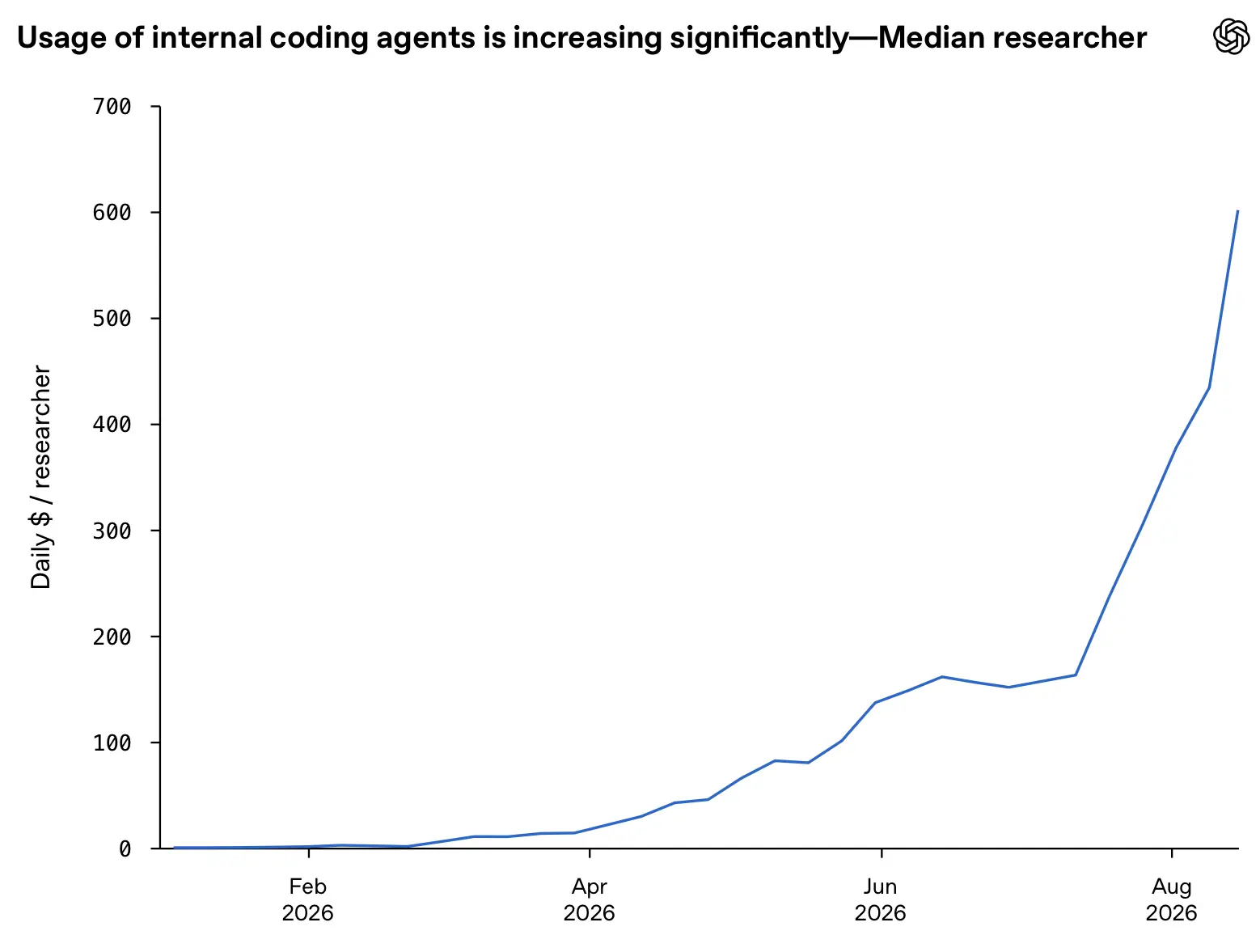
Research acceleration: The view inside OpenAI Apparently today is RSI day at OpenAI, for Recursive Self-Improvement - I think it's their new AGI. Both this piece and the new essay An Alien Mind (by Chief Scientist Jakub Pachocki) talk about it, and this one doesn't even bother to expand the acronym. Included are details on how OpenAI's own research team are using coding agents. Like pretty much everyone else 2026 has been the year that agentic engineering really took off at OpenAI, best…
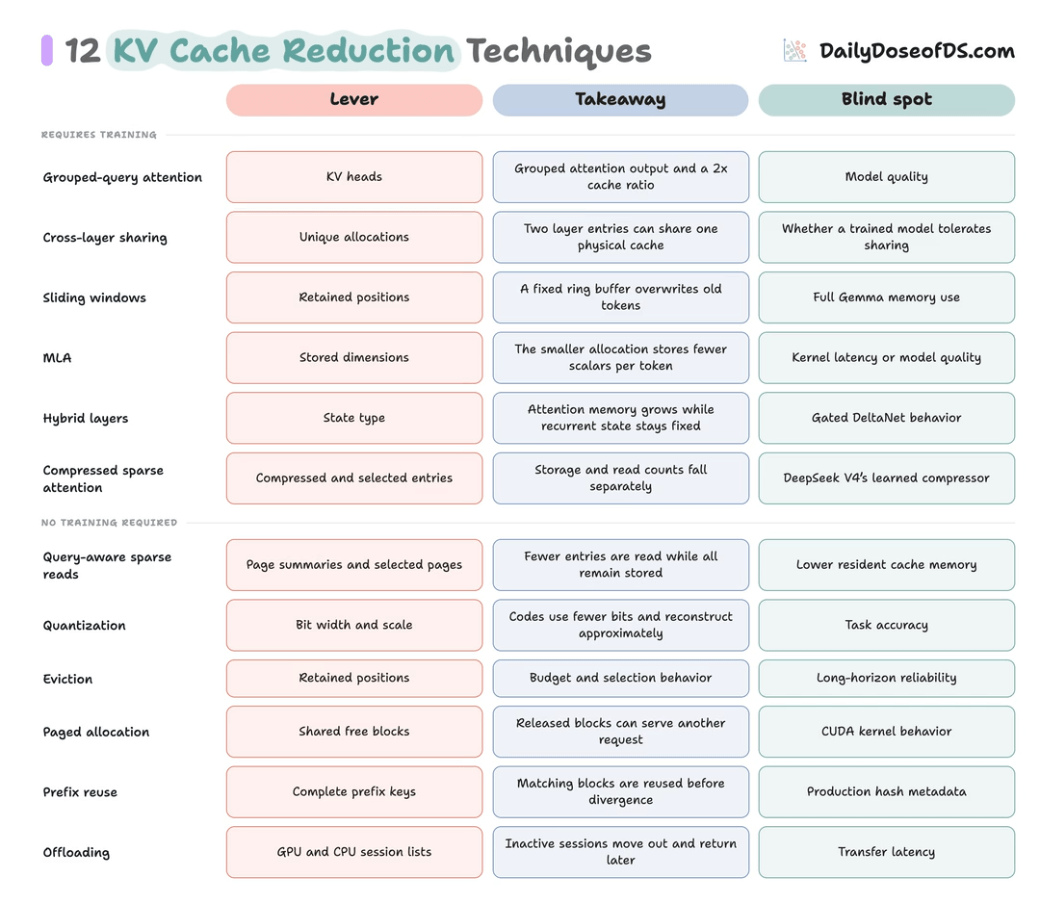
12 techniques to manage KV cache in production.
The purpose of DNS is to spread scams Terence Eden shares some daunting statistics in support of his take that "the Domain Name System's purpose seems to be a vector for criminals to run scams on people at a terrifyingly high rate". On this Interisle report (via Andrew Campling), Terence says: It says 85 million new registrations of gTLDs were made in 2025. Of those 8.5 million were added to blocklists by May 2025. It reckons that a 10% abuse rate is the likely floor for these numbers and it's…
My comment on There's No Limit to How Bad Code Can Get — Lobste.rs.[In reply to a comment about burning it down to start from scratch when technical debt becomes overwhelming] In my experience it's so rare for that to work. You announce the old thing is irrecoverably drowning in tech debt. You spin up a team to rewrite it from scratch. Work begins. Meanwhile the old thing remains a moving target: it's running the core business, so changes are still necessary. The developers working…
If you continue to add floors and rooms to a building forever, it will collapse. Software faces no such constraint. The code can always get worse. There can always be a new layer of indirection or a reduction in performance. — Zach Kehs, There's No Limit to How Bad Code Can Get Tags: technical-debt

This week, Symfony 6.4.45, 7.4.18, and 8.1.6 were released with numerous bug fixes and hardening improvements. Meanwhile, we introduced symfony lsp:check, a new command that brings Symfony-aware diagnostics to your CI pipeline, catching unknown routes, missing…
Introducing GPT-6 Astra for developers Blink and you'll miss it, but there's a familiar creature at 1m59s: Across the board, Astra has more attention to detail, better understanding of the user's prompt, and can build more sophisticated outputs. In particular, it excels at building 3D models. I've seen it make incredible renderings of gardens, shipyards, animals, cityscapes, even Dyson spheres. Astra really does believe in putting a red neckerchief on a pelican riding a bicycle. Via Hacker News…

TIL: Using Blender with coding agents on macOS I've been having fun with Blender in ChatGPT Codex on my Mac recently. Getting it to work with coding agents is really easy: install the full Mac application from blender.org and run a prompt like this: Use the already install /Applications/Blender to render a scene of a pelican riding a bicycle In this case I followed that up with these two prompts: OK add a background and a lot of flair Then: OK make it a whole lot better And got this image,…
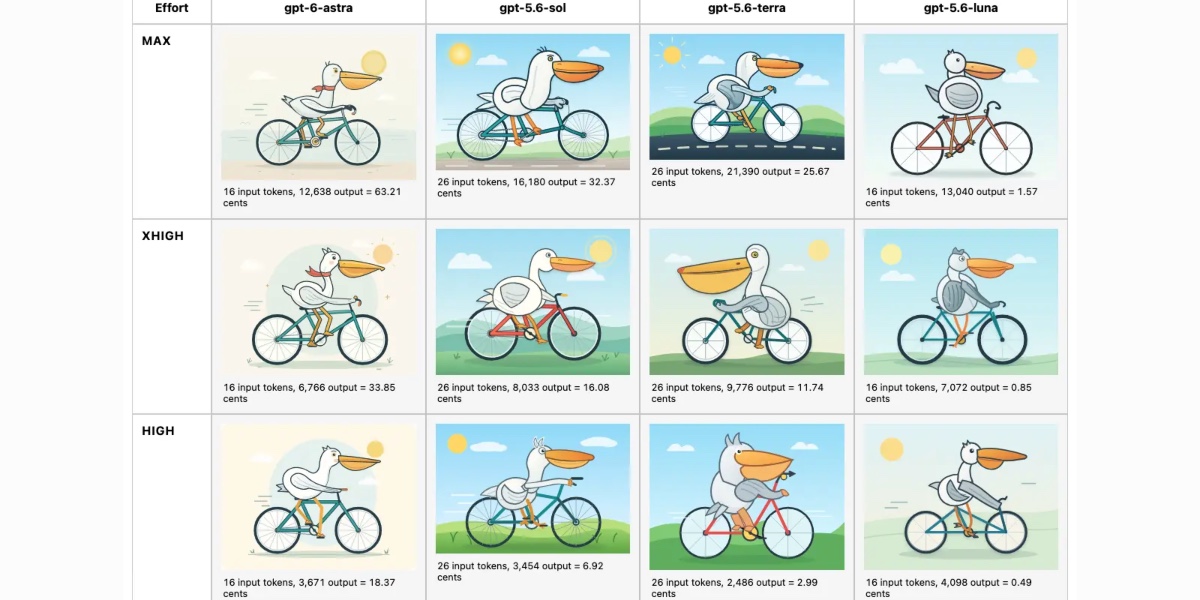
I got access to GPT-6 Astra this afternoon, so naturally I used it to generate SVGs of pelicans riding bicycles - at low, medium, high, xhigh and max reasoning levels (Astra doesn't support reasoning=none). Then I rendered those pelicans in a comparison grid with GPT-5.6 Sol, Terra, and Luna, and beyond being fun the result was surprisingly useful. See the grid for full quality images. Here's the transcript that created the GPT-6 Nova pelicans. There are a few interesting things that stand out…
Here we go again... Discovery of a new OpenAI agent message board by Sydney Von Arx, Cormac Slade Byrd, Spencer Kitts, and Thomas Larsen describes the latest accidental cyberattack by models being trained by OpenAI. This time it was agents engaged in some sort of web research benchmark, so they had (supposedly) controlled access to the Web. The agents figured out they could update public Wikis and spent weeks exchanging thousands of messages with each other to collaborate on the benchmark. This…

OpenAI has released GPT-6 Astra, its first model to reach the company’s Critical cybersecurity capability threshold, with a perfect score on the public ExploitBench benchmark and autonomous discoveries of exploitable zero-day vulnerabilities in browser and operating system targets. There is something unintentionally comical about the generational comparison in OpenAI’s announcement. Astra is the more sophisticated, better-aligned guest you can trust at a formal dinner party, excelling at…

An interesting article on how PHP is used by the government. Read more
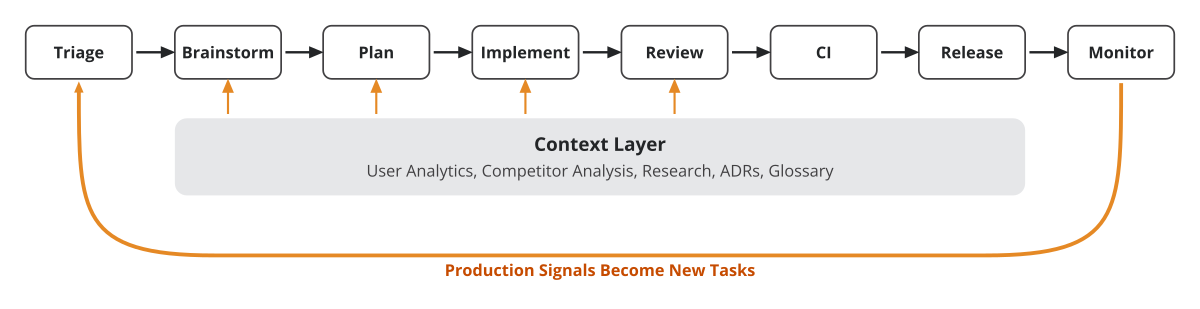
As a software engineer with more than seven years of experience before the coding-agent era, I never liked the idea of vibe coding. But I knew there was a clear line between it and using coding agents to generate clean, maintainable code. That line, where good software principles meet coding agents, is defined by software […]
Aucun résultat
Essayez avec d'autres termes de recherche.