Flux
Couleur d'accent
Toutes les sources

Simon Willison's Weblog

680 articles Flux RSS
IA Programmation
Kimi K3, and what we can still learn from the pelican benchmark

Kimi K3, and what we can still learn from the pelican benchmark

Chinese AI lab Moonshot AI announced Kimi K3 this morning, describing it as their "most capable model to date, with 2.8 trillion parameters". It's currently available via their website and API, but an open weight release is promised "by July 27, 2026". Moonshot are calling this the first "open 3T-class model" (I guess they're rounding 2.8 trillion up to 3 trillion), taking the crown from DeepSeek's 1.6T v4 Pro. Their self-reported benchmarks have K3 mostly beating Claude Opus 4.8 max and…

Simon Willison's Weblog
Quoting Thibault Sottiaux

Quoting Thibault Sottiaux

On file deletions. We’ve investigated a handful of reports where GPT-5.6 unexpectedly deleted files. What we have found is that this most commonly occurs when: Full access mode is enabled and codex is run without sandboxing protections, including without auto review being enabled The model attempts to override the $HOME env var to define a temporary directory. The model makes an honest mistake and mistakenly deletes $HOME instead. — Thibault Sottiaux, describing a pretty gnarly Codex bug…

Simon Willison's Weblog
Inkling: Our open-weights model

Inkling: Our open-weights model

Inkling: Our open-weights model Mira Murati's Thinking Machines Lab just released their first open-weights model. Inkling is "a Mixture-of-Experts transformer with 975B total parameters, 41B active" - an Apache-2.0 licensed multimodal model trained on 45 trillion tokens of text, images, audio and video. They're also promising Inkling-Small, a 276B (12B active) model, but that's still being tested and the weights will be released "once that work is complete". The model card is much shorter than…

Simon Willison's Weblog
Mermaid to ASCII art (mermaid-ascii)

Mermaid to ASCII art (mermaid-ascii)

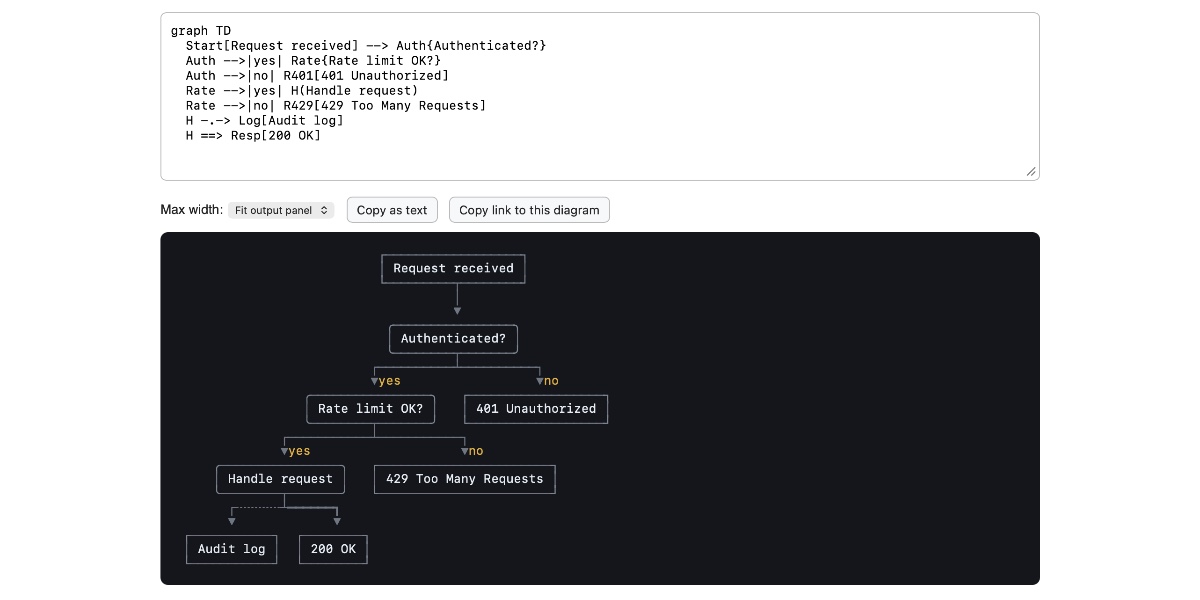
Tool: Mermaid to ASCII art (mermaid-ascii) After building the Mermaid to ASCII tool based on Grok Build's Rust code I learned that there's an older, more fully-featured Go library called AlexanderGrooff/mermaid-ascii that implements a similar pattern, so I had Claude Fable 5 compile that one to WebAssembly as well so I could compare the two. This one includes support for colors! Tags: go, tools, webassembly, mermaid

Simon Willison's Weblog
Quoting Linus Torvalds

Quoting Linus Torvalds

I realize that some people really dislike AI, but this is an area where I'm willing to absolutely put my foot down as the top-level maintainer. Linux is not one of those anti-AI projects, and if somebody has issues with that, they can do the open-source thing and fork it. Or just walk away. AI is a tool, just like other tools we use. And it's clearly a useful one. It may not have been that "clearly" even just a year ago, but it's no longer in question today. There are other questions around AI…

Simon Willison's Weblog
Mermaid to Unicode box art (grok-mermaid)

Mermaid to Unicode box art (grok-mermaid)

Tool: Mermaid to Unicode box art (grok-mermaid) While exploring the codebase for the newly open-sourced Grok CLI coding agent I came across xai-grok-markdown/src/mermaid.rs, a "self-contained terminal renderer for Mermaid diagrams" written in Rust. I figured it would be fun to try that out in a browser via WebAssembly. Here's the prompt I ran in Claude Code for web (Fable 5), and this is what the resulting tool looks like: Tags: tools, rust, webassembly, mermaid, grok, xai

Simon Willison's Weblog
xai-org/grok-build, now open source

xai-org/grok-build, now open source

xai-org/grok-build, now open source xAI's grok CLI tool faced severe community backlash yesterday when it became apparent that running the command in a directory could upload that entire directory to xAI's Google Cloud buckets. One user reported running it in their home directory and seeing it upload "my SSH keys, my password manager database, my documents, photos, videos, everything". I've not seen an official explanation for why it was doing this, but xAI did respond to the feedback (Musk:…

Simon Willison's Weblog
How I tricked Claude into leaking your deepest, darkest secrets

How I tricked Claude into leaking your deepest, darkest secrets

How I tricked Claude into leaking your deepest, darkest secrets I've been impressed by the way the Claude web_fetch tool is designed to avoid data exfiltration attacks. Ayush Paul found a hole in that design. To recap: regular Claude chat is at risk of lethal trifecta attacks, because it has access to private data (in the form of memories of your past interactions) and has a tool for accessing online content which can both read hostile instructions and exfiltrate data through the URLs it…

Simon Willison's Weblog
simonw/pedalican

simonw/pedalican

simonw/pedalican Clearly I wasn't paying attention when these were first announced back in May, but today I accidentally activated a "pet" in Codex Desktop - a little animated robot, reminiscent of Clippy - and then learned you can create your own. So I did, and now I have a cute little pelican on a bicycle bouncing around my desktop giving me updates on my Codex tasks. Your browser does not support HTML5 video. The most interesting thing about this process was watching how the custom pet was…

Simon Willison's Weblog
lobste.rs is now running on SQLite

lobste.rs is now running on SQLite

lobste.rs is now running on SQLite Community site Lobsters has been planning a migration away from MariaDB since August 2018 - originally targeting PostgreSQL, but last year they decided to investigate SQLite instead. This weekend they completed the migration, and now consider it stable enough that it looks like this is the permanent architecture for the site going forward: SQLite seems to have passed with flying colors: cpu usage is down, memory usage is down, site seems to be snappier at…

Simon Willison's Weblog
Quoting Armin Ronacher

Quoting Armin Ronacher

The shared language of a software project is not English or Python but it is the common understanding of what its concepts mean, where the boundaries are, which invariants matter, who owns what, and why the system has the shape it does. This language is rarely written down in one place. It lives partly in documentation and code, but also in code review, conversations, arguments, and the experience of having to explain a change to somebody else. Before agents, some of this shared understanding…

Simon Willison's Weblog
Using uvx in GitHub Actions in a cache-friendly way

Using uvx in GitHub Actions in a cache-friendly way

TIL: Using uvx in GitHub Actions in a cache-friendly way I finally found a cache-friendly recipe for using uvx tool-name in GitHub Actions workflows that I like. The trick is setting a UV_EXCLUDE_NEWER: "2026-07-12" environment variable at the start of the workflow and then using that as part of the GitHub Actions cache key. This means any uvx tool-name commands will resolve to the most recent version as-of that date, and you can bust the cache and upgrade the tools by bumping the date in the…

Simon Willison's Weblog
DOOMQL

DOOMQL

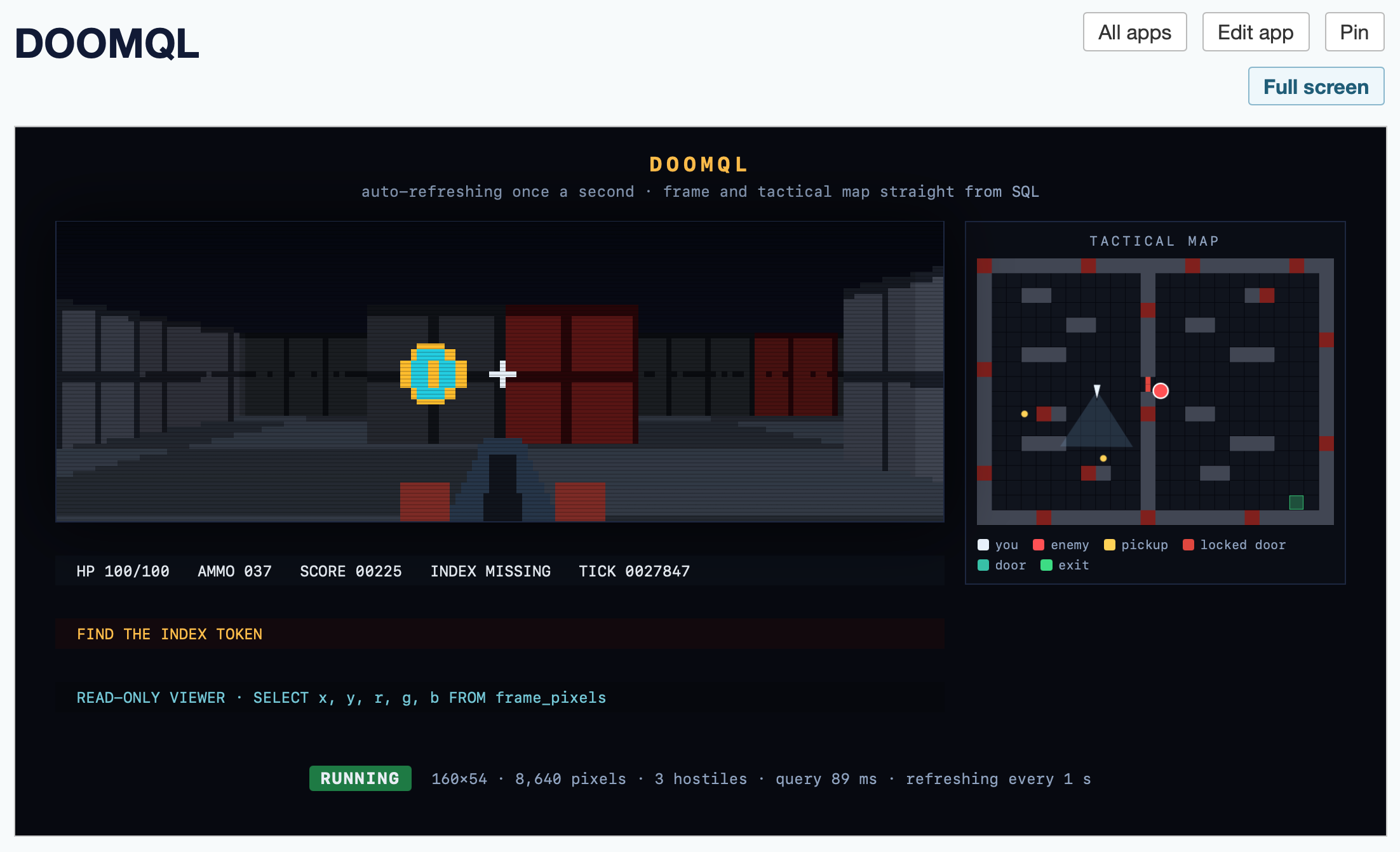
DOOMQL Peter Gostev built this using GPT-5.6 Sol. This is a lot of fun: DOOMQL started with a deliberately unreasonable question: what if SQLite were the game engine, not merely the place where a game stores data? The result is a small, original Doom-like game in which SQL owns movement, collision, enemies, combat, progression and every RGB pixel on screen. It's implemented as a Python terminal script - I tried it out like this: cd /tmp git clone https://github.com/petergpt/doomql cd doomql uv…

Simon Willison's Weblog
Esc