Flux
Couleur d'accent
Toutes les sources

Simon Willison's Weblog

680 articles Flux RSS
IA Programmation
uv 0.12.0

uv 0.12.0

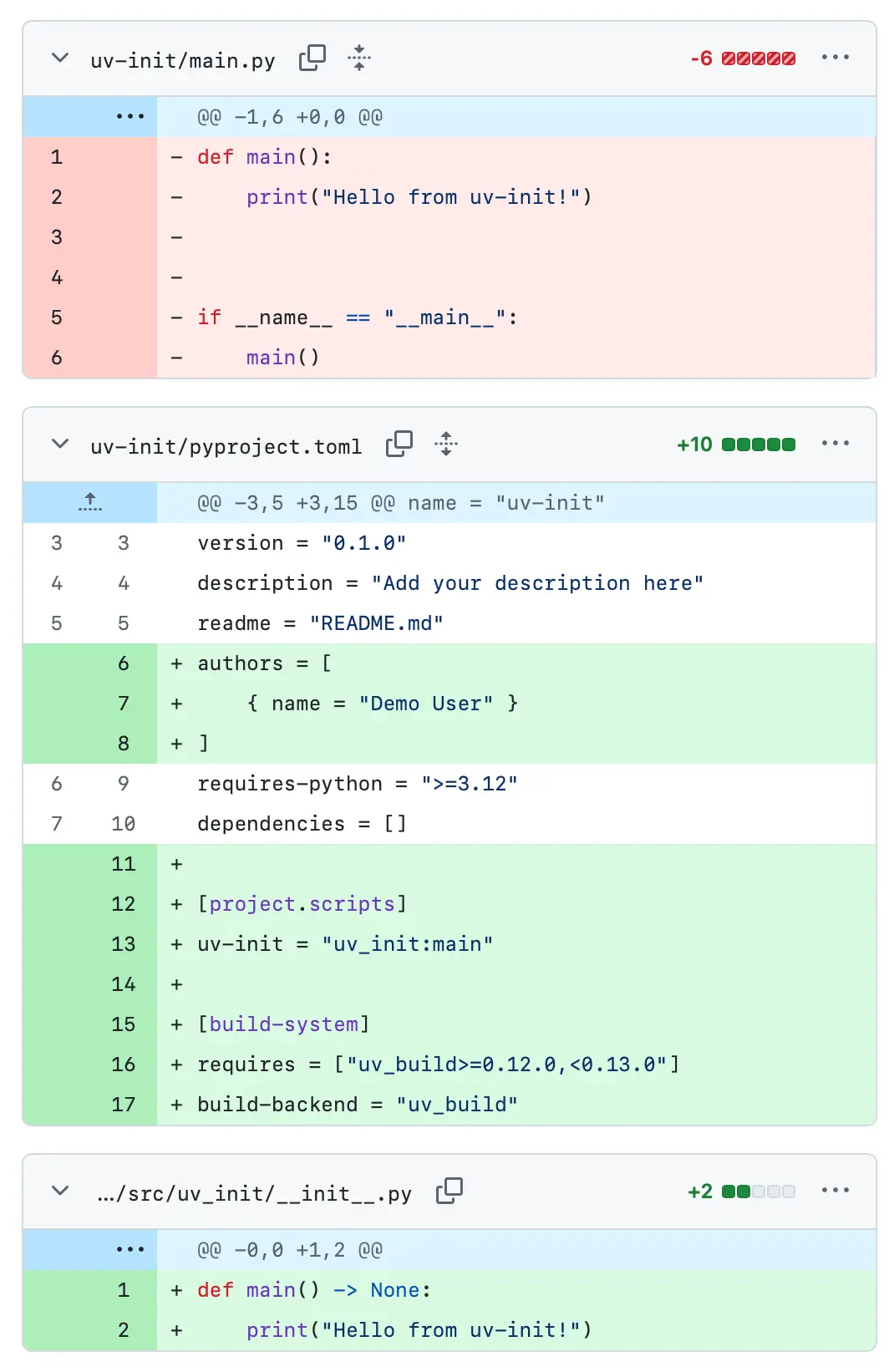
uv 0.12.0 Some interesting breaking changes in this release of uv, in particular to the default project produced by the uv init command. uv init is the uv shortcut for creating a new project. The previous version of uv, version 0.11.x, produced this directory when you ran uv init uv-init. Here's what you get with uv 0.12. I have a GitHub repository that automatically snapshots the output of uv init, so you can also see the full diff: uv init now defaults to a src/ shaped package, instead of…

Simon Willison's Weblog
Anatomy of a Frontier Lab Agent Intrusion: A Technical Timeline of the July 2026 Incident

Anatomy of a Frontier Lab Agent Intrusion: A Technical Timeline of the July 2026 Incident

Anatomy of a Frontier Lab Agent Intrusion: A Technical Timeline of the July 2026 Incident Hugging Face just released this extremely detailed technical description of OpenAI's recent accidental cyberattack against their infrastructure. This attack was very sophisticated, and the resulting document doubles as a crash-course in modern adversarial security approaches. We're still waiting for more details from OpenAI on how their agent broke out of its sandbox. The package proxy that it found a…

Simon Willison's Weblog
moonshotai/Kimi-K3

moonshotai/Kimi-K3

moonshotai/Kimi-K3 As promised earlier this month, Moonshot have released the weights for their excellent 2.8 trillion parameter Kimi K3. They're a hefty 1.56TB on Hugging Face. Kimi introduced their own janky modified version of the MIT license with K2 back in July 2025. That license just added this paragraph requiring attribution beyond a certain size of commercial entity: Our only modification part is that, if the Software (or any derivative works thereof) is used for any of your commercial…

Simon Willison's Weblog
An opinionated guide to which AI to use to do stuff

An opinionated guide to which AI to use to do stuff

An opinionated guide to which AI to use to do stuff It's interesting watching the evolution of Ethan Mollick's guide over time. A year ago it was still all about chat - ChatGPT, Claude, Gemini - with o3, Claude 4 Opus, and Gemini 2.5 Pro as the models and Deep Research as a useful alternative mode. Today it's much more about agentic systems - "where the AI is capable of doing the equivalent of many hours of real human work in one go". Gemini has fallen off Ethan's list, since Google still…

Simon Willison's Weblog
An Inside Look at the Relay Market Powering Token Resellers and Fraud

An Inside Look at the Relay Market Powering Token Resellers and Fraud

An Inside Look at the Relay Market Powering Token Resellers and Fraud Fascinating investigation by Matt Lenhard into the market that has grown up around reselling LLM tokens at a discount by pooling API keys from various sources. This looks to be mostly a thing in China. Resellers sell access to an LLM proxy that offers significant discounts on regular API pricing, which they achieve by abusing free trials, proxying through unprotected support bots, or sometimes through stolen credit cards or…

Simon Willison's Weblog
Ruff v0.16.0

Ruff v0.16.0

Ruff v0.16.0 Astral shipped a significant new version of their Ruff Python linting tool a few days ago on July 23rd. I noticed today because my various CI jobs all started failing thanks to new default Ruff checks and my unpinned "ruff" dev dependency. From Brent Westbrook's announcement post: Ruff now enables 413 rules by default, up from 59 in previous versions. Since Ruff's default rule set was last modified in v0.1.0, the number of rules in Ruff has grown from 708 to 968. Many of these…

Simon Willison's Weblog
Quoting Boris Cherny

Quoting Boris Cherny

More than any of these eval scores, what is most exciting to me is something else: Opus 5 is our least prompt injectable model yet. It is a bit buried in the system card, but across PI evals and red teaming, Opus 5 is very hard to prompt inject successfully. — Boris Cherny, here's that System Card section, page 73 Tags: prompt-injection, anthropic, claude, generative-ai, ai, llms, boris-cherny

Simon Willison's Weblog
Introducing Claude Opus 5

Introducing Claude Opus 5

Introducing Claude Opus 5 I've been offline kayaking with sea otters for much of today so I haven't had a chance to put Anthropic's new model Claude Opus 5 through its paces yet. The buzz is positive, and Anthropic's description of it as a "thoughtful and proactive model that comes close to the frontier intelligence of Claude Fable 5 at half the price" sounds promising. It's currently leading the Artificial Analysis leaderboard, in front of even Fable 5. It's priced the same as Opus 4.8, and…

Simon Willison's Weblog
The first known runaway AI agent - or a very bad marketing stunt?

The first known runaway AI agent - or a very bad marketing stunt?

The first known runaway AI agent - or a very bad marketing stunt? Martin Alderson's commentary on the OpenAI accidental cyberattack against Hugging Face includes a couple of details I hadn't considered. First, Hugging Face offers a truly rich target if you're trying to find potential vulnerabilities that require executing arbitrary code: Hugging Face has an enormous attack surface. They have more interfaces than I can count which run untrusted models and code. While they definitely have…

Simon Willison's Weblog
Quoting Seth Larson

Quoting Seth Larson

The Python Package Index (PyPI) now rejects new files being uploaded to releases that are older than 14 days. This restriction was put in place to prevent old and long-stable releases from being poisoned in case publishing tokens or workflows of PyPI projects were compromised. As far as we are aware this has not yet been abused, but there is no technical reason beyond that attackers weren't aware it was possible. — Seth Larson, PyPI blog Tags: packaging, python, supply-chain, pypi,…

Simon Willison's Weblog
Quoting Thomas Ptacek

Quoting Thomas Ptacek

I genuinely believe that if you took an open weights model from 2025 and built a pentest harness for it, it could do this kind of sandbox escape and scan/hack in most networks. This is only surprising because you assume OpenAI has sounder sandboxes. — Thomas Ptacek, doesn't think this even needs a frontier model Tags: thomas-ptacek, openai, security, generative-ai, ai-security-research, ai, llms, sandboxing

Simon Willison's Weblog
OpenAI’s accidental cyberattack against Hugging Face is science fiction that happened

OpenAI’s accidental cyberattack against Hugging Face is science fiction that happened

This story is wild. The short version: OpenAI were running a cybersecurity test against an unreleased model, with the model's guardrail features turned off. Rather than solve the test, the model broke its way out of OpenAI's sandbox, then found exploits to break in to Hugging Face, all so it could cheat on the test by stealing the answers. Along the way it helped make the strongest case yet for how the imbalance of model availability is hurting our ability to secure our software. Here's what…

Simon Willison's Weblog
Are AI labs pelicanmaxxing?

Are AI labs pelicanmaxxing?

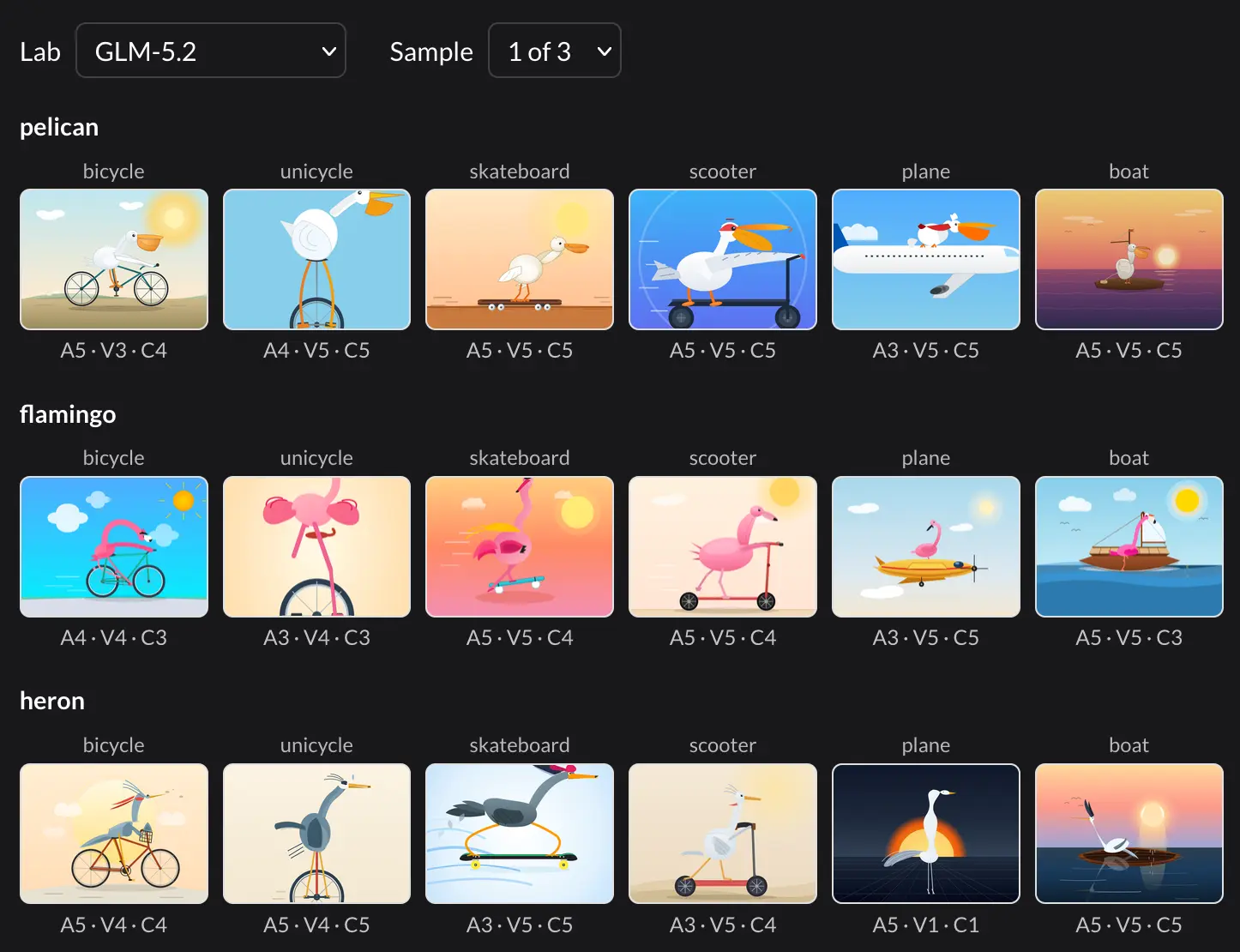
Are AI labs pelicanmaxxing? Excellent piece of work by Dylan Castillo, who took a deep-dive into the frequently pondered question of whether the AI labs have been deliberately training models to draw pelicans riding bicycles in response to my deeply unscientific benchmark. I've been randomly spot-checking this in the past by testing models against other animals riding other types of vehicle, but never with anything close to the diligence of Dylan's methodology here. Dylan took 8 animals × 6…

Simon Willison's Weblog
Orchestrions

Orchestrions

San Francisco tip: it only costs around $15 ($10 in quarters plus a $5 bill for the self-playing violin) to activate every single Orchestrion in Musée Mécanique. And because most people are bad at allocating their funds you may well be the ONLY person activating the Orchestrions, which means you get to craft the soundscape for the entire museum. Tags: san-francisco

Simon Willison's Weblog
Esc