Flux
Couleur d'accent
Have your agent record video demos of its work with shot-scraper video

Have your agent record video demos of its work with shot-scraper video

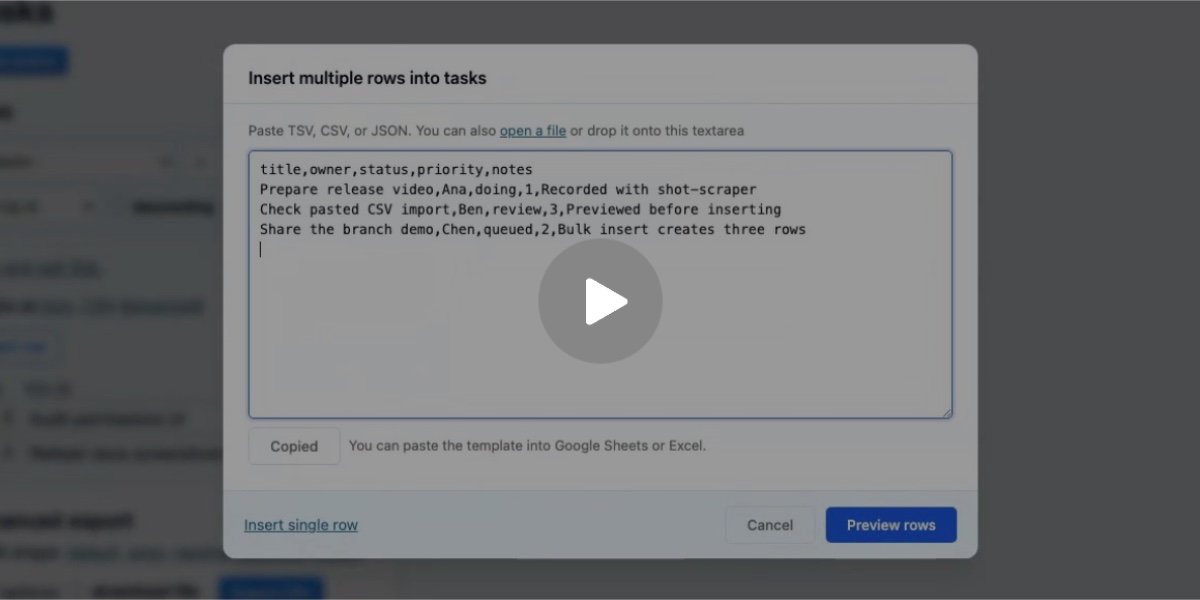
shot-scraper video is a new command introduced in today's shot-scraper 1.10 release which accepts a storyboard.yml file defining a routine to run against a web application and uses Playwright to record a video of that routine. I've written before about the importance of having coding agents produce demos of their work; this is my latest attempt at enabling them to do that. Here's an example video created using shot-scraper video, exercising a still in development feature adding the ability to…

Simon Willison's Weblog
The End of Tokenmaxxing

The End of Tokenmaxxing

The practice of tokenmaxxing appears to be dying out, even before I had a chance to write about it. Good riddance. Burning tokens to create the appearance of productivity was fated to last only until the accountants learned about it, and the strictest of all accountants is one’s personal checkbook. What got many developers thinking […]

O'Reilly Radar — AI/ML
Summary: TGT’s 2026 ICML Papers

Summary: TGT’s 2026 ICML Papers

The International Conference on Machine Learning (ICML), held annually for over forty years, is among the most influential conferences in modern AI research. This year in Seoul, ICML is hosting its second workshop on Technical AI Governance Research (TAIGR), and several members of MIRI’s Technical Governance Team (TGT) will attend in July. This post summarizes […] The post Summary: TGT’s 2026 ICML Papers appeared first on Machine Intelligence Research Institute.

MIRI Blog
Beyond Prompt Injection

Beyond Prompt Injection

In late 2025, the security community stopped treating indirect prompt injection as a theoretical risk. It had spent two years as a tidy lab demonstration; then production systems started getting hit. The OWASP Top 10 for LLM applications now ranks prompt injection as the number-one risk, NIST has called indirect injection generative AI’s greatest security […]

O'Reilly Radar — AI/ML
HTML table extractor

HTML table extractor

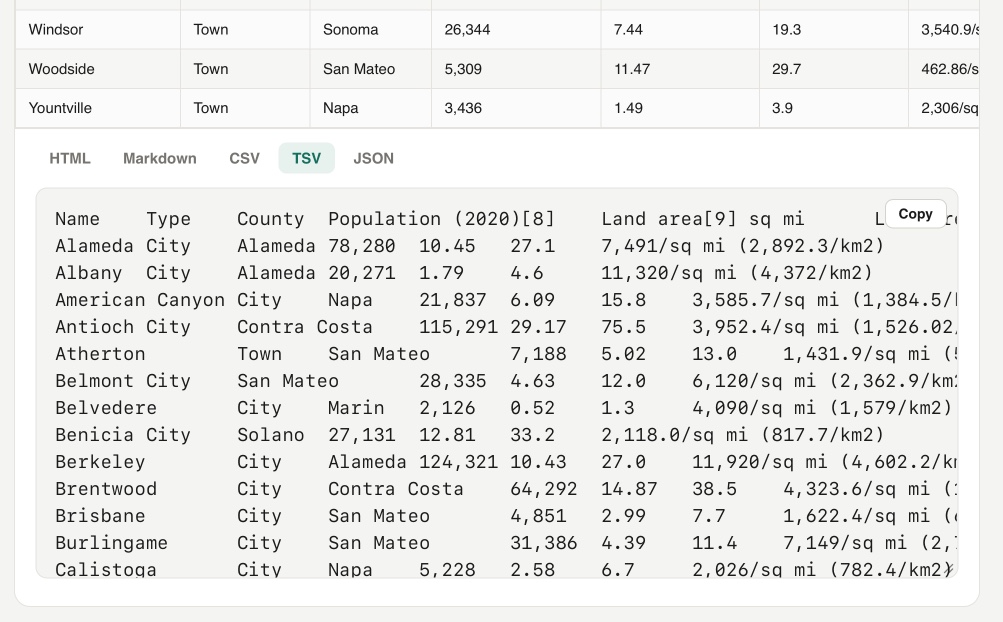
Tool: HTML table extractor Yet another in my growing collection of paste-conversion tools. This one accepts pasted rich text from browsers (with embedded HTML tables) and converts every detected table into HTML, Markdown, CSV, TSV, or JSON. Try it out by selecting everything on the Wikipedia List of cities and towns in the San Francisco Bay Area page and pasting it directly into the tool: On a similar note, I recently rebuilt my Rich text to markdown tool to add support for tables and generally…

Simon Willison's Weblog
Ornith-1.0: Self-Scaffolding LLMs for Agentic Coding

Ornith-1.0: Self-Scaffolding LLMs for Agentic Coding

Ornith-1.0: Self-Scaffolding LLMs for Agentic Coding This is an interesting new open weights (MIT licensed) model, the first model release from DeepReinforce. [...] with variants including 9B Dense, 31B Dense, 35B MoE, and 397B MoE. Built on top of pretrained Gemma 4 and Qwen 3.5, it achieves state-of-the-art performance among open-source models of comparable size on coding benchmarks. As far as I can tell the licenses of those underlying models is compatible with being used in this way - Gemma…

Simon Willison's Weblog
Agent Memory

Agent Memory

The following article originally appeared on Angie Jones’s LinkedIn page and is being republished here with the author’s permission. I’m fascinated by the concept of agent memory. LLMs are stateless by design, meaning they have no memory or awareness of past interactions. Each prompt you send to an LLM is treated as a completely isolated […]

O'Reilly Radar — AI/ML
Quoting Jon Udell

Quoting Jon Udell

Human Agent in the loop I dislike the phrase “human in the loop” because it cedes authority to the machines. Let’s flip the narrative. It’s our loop, we work the same way we always have, now we recruit agents to join the team. An agent-assisted process need not be a black box that takes in prompts and emits features. [...] Let’s do agentic software development like that. Not as a loop we’ve been excluded from, instead as one we invite agents into. — Jon Udell, “Doctor, it hurts when…

Simon Willison's Weblog
Hack Your Summer

Hack Your Summer

Hack Your Summer I learned about this initiative from DJ Patil this morning: It’s a 4-week, high-velocity production sprint for undergraduate students, graduate students, and recent graduates who want to build something real this summer. You’ll learn how to identify a project, make steady progress, get support from mentors and peers, and create tangible, public-facing work you can actually show future employers. Hack Your Summer is partly a reaction to the internship crisis facing US college…

Simon Willison's Weblog
The Process of Smart Note-Taking

The Process of Smart Note-Taking

I’ve taken notes over my whole life. As a Swiss, I’m very particular about organization and structured in filing my knowledge. I’ve tried and taken notes in many different ways, from forgetting everything, to noting down every detail, to only taking listings of the most important things. Today, I can say, there’s no right way, but I can see it’s working for me, as my most interesting ideas grow inside my note taking system, and they power what I share online, and earning a living from it.

SSP Data Engineering Blog
Operationalizing Data Orchestration: Best Practices for DevOps, Infra, and Code Locations

Operationalizing Data Orchestration: Best Practices for DevOps, Infra, and Code Locations

Operating the data orchestration layer can be as critical as the source OLTP databases, when decisions are taken from the data assets produced by downstream data pipelines. When orchestration gets at the heart of triggering and observing most of the schedules or assets, there is even more importance involved. In Part 1 I argued that the open data platform makes orchestration data and its flow simpler, providing integration into data assets and transformation, ETL, BI and even Kubernetes all…

SSP Data Engineering Blog
Esc