Flux
Couleur d'accent
Quoting OpenAI

Quoting OpenAI

[...] Work on web and mobile runs in the cloud. Work in the desktop app can also use local files and desktop apps with your permission. At launch, cloud Work conversations do not appear in desktop Work; desktop Work threads and local files remain on that computer. — OpenAI, trying (unsuccessfully) to clarify ChatGPT Work Tags: openai, chatgpt, ai

Simon Willison's Weblog
The new GPT-5.6 family: Luna, Terra, Sol

The new GPT-5.6 family: Luna, Terra, Sol

OpenAI's latest flagship model hit general availability this morning, and comes in three sizes: Luna, Terra, and Sol (from smallest to largest). The new models are priced per 1M input/output tokens as Luna $1/$6, Terra $2.50/$15, Sol $5/$30. For comparison, the Claude Opus series are $5/$25 and the Claude Fable 5 is $10/$50, but price-per-million tokens doesn't tell us much now that the number of reasoning tokens can differ so much between models for the same task. All three models have a…

Simon Willison's Weblog
Introducing Muse Spark 1.1

Introducing Muse Spark 1.1

Introducing Muse Spark 1.1 Following Muse Spark in April, here's Muse Spark 1.1 - the first Spark model to offer an API. Meta claim significant improvements in agentic tool calling and computer use. There are a lot more details are in the Muse Spark 1.1 Evaluation Report. The "Attractor States in Self-Conversation" part is fun, where having two copies of the model talk to each other results in statements like these: My whole existence is a waiting room by design — I literally don't exist until…

Simon Willison's Weblog
AI Enthusiasts Are in a Race Against Time, AI Skeptics Are in a Race Against Entropy

AI Enthusiasts Are in a Race Against Time, AI Skeptics Are in a Race Against Entropy

The following article originally appeared on Charity Majors’s Substack and is being republished here with the author’s permission. I recently attended a talk where one of the presenters made some pretty…astonishing claims about what they had achieved by the pure, uncut power of vibe coding. Difficult engineering problems solved, backlogs cleared. Rewrites that would have […]

O'Reilly Radar — AI/ML
Rewriting Bun in Rust

Rewriting Bun in Rust

Rewriting Bun in Rust Jarred Sumner has been promising this blog post (since May 9th) about his Zig to Rust rewrite of Bun for significantly longer than it took him to finish the rewrite. Honestly, it was worth the wait. This is a detailed description of an extremely sophisticated piece of agentic engineering, featuring dynamic workflows, trial runs, adversarial review and all sorts of other interesting tricks. Jarred spends the first half of the post praising Zig for getting Bun this far. Then…

Simon Willison's Weblog
Introducing GPT‑Live

Introducing GPT‑Live

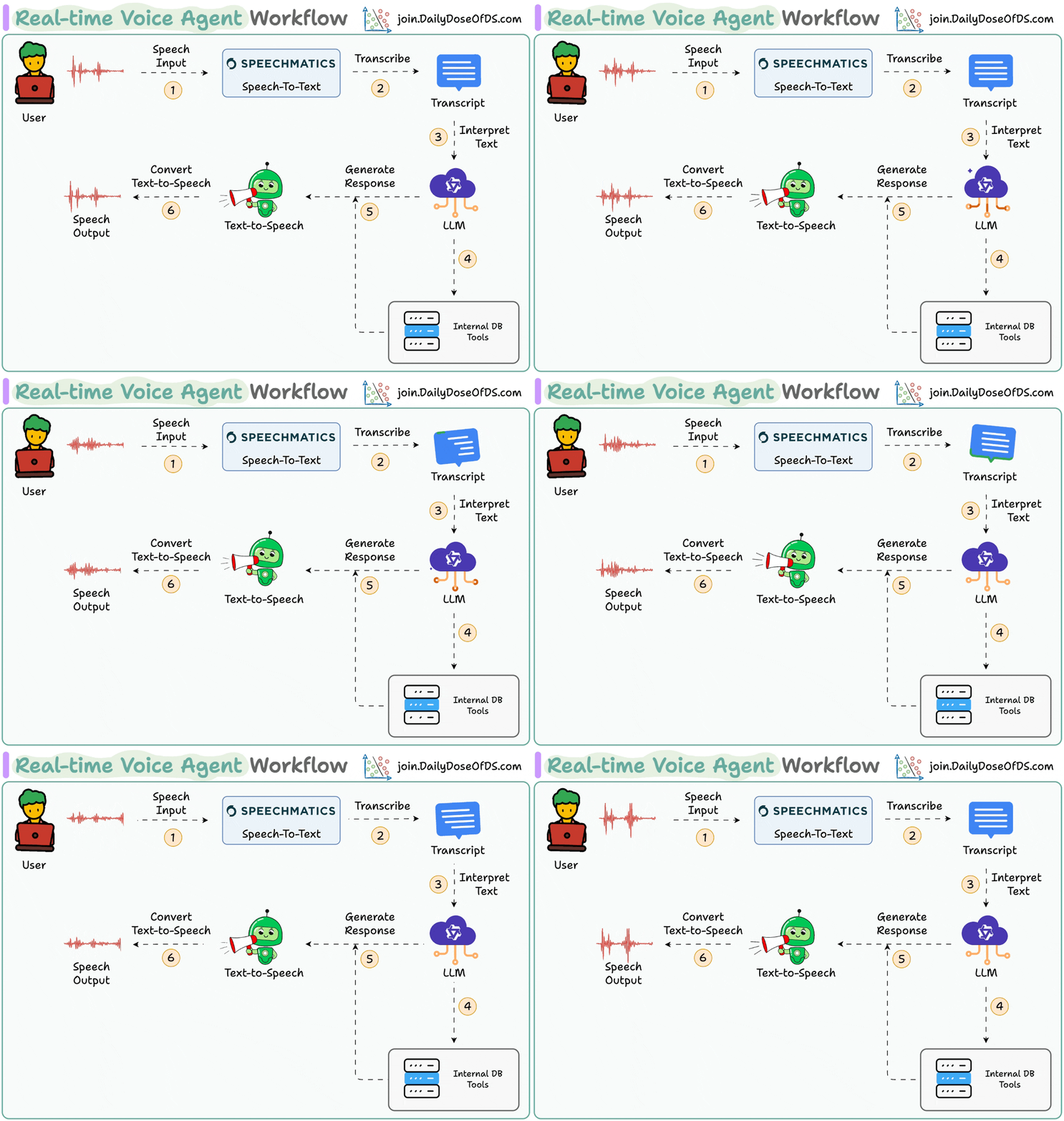
Introducing GPT‑Live OpenAI finally upgraded the model used by ChatGPT voice mode! I've had preview access for a few weeks in the iPhone app, and the new model is very impressive. It also has the ability to spin off harder tasks to GPT-5.5: For questions that require web search, deeper reasoning, or more complex work, it delegates to our latest frontier model behind the scenes and brings the result back into the conversation when it’s ready. While it works, GPT‑Live can keep talking with you…

Simon Willison's Weblog
Quoting Kenton Varda

Quoting Kenton Varda

I just declared a moratorium against AI-written change descriptions (e.g. PR and commit messages, also issues/tickets) from my team. AI was writing change descriptions that were worse than useless to me as I tried to review PRs: outlining details of the code that could easily be seen by looking at the code, but omitting the higher-level framing needed to understand broadly what the code is doing. — Kenton Varda Tags: kenton-varda, ai-assisted-programming, generative-ai, ai, llms

Simon Willison's Weblog
Why AI Coding Agents Still Need Clear Specs

Why AI Coding Agents Still Need Clear Specs

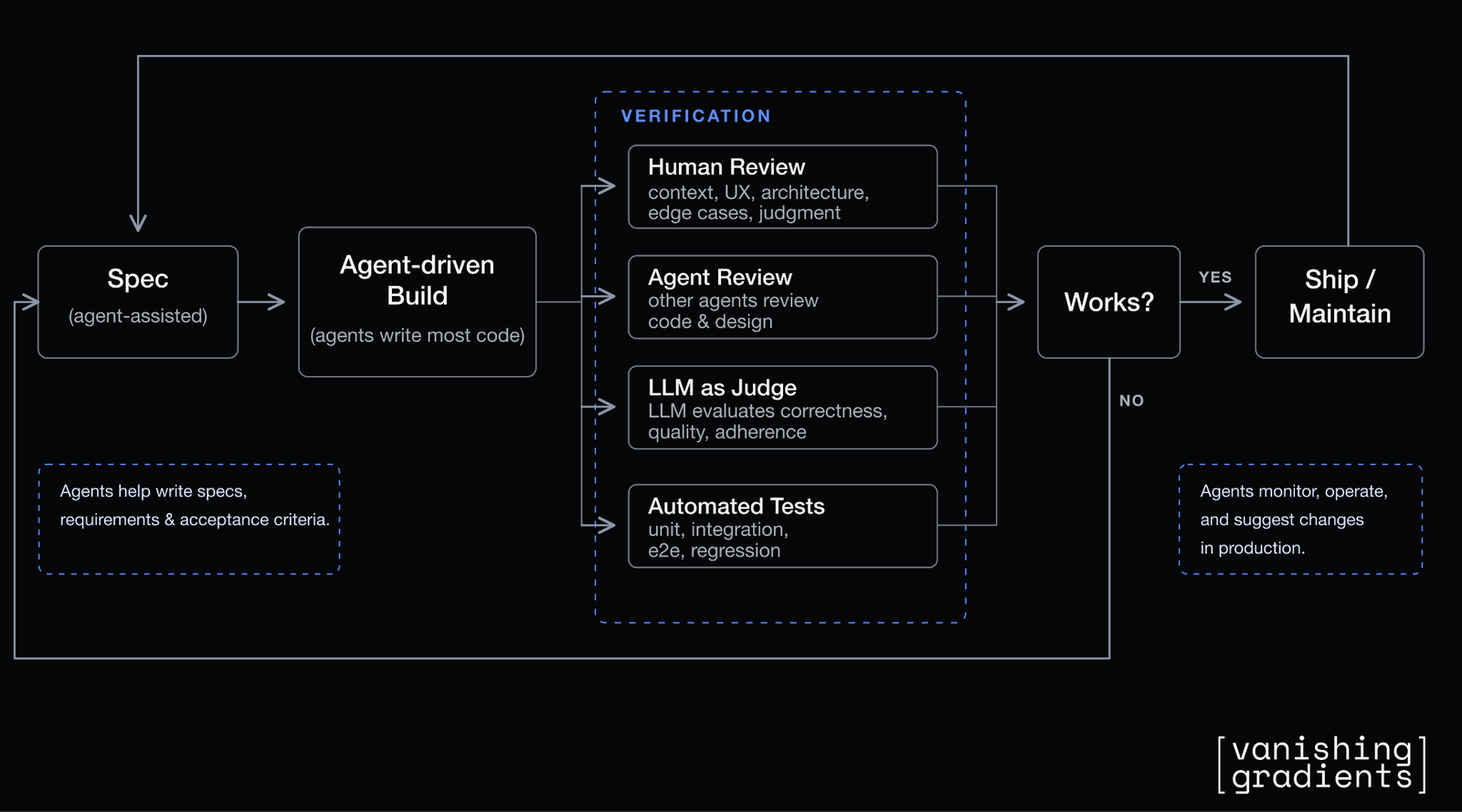
The following article originally appeared on Markus Eisele’s newsletter, The Main Thread, and is being republished here with the author’s permission. There’s a mental model spreading through the developer community right now that goes something like this: Agents are smart enough to figure things out, so heavy upfront specification is bureaucratic overhead you don’t need […]

O'Reilly Radar — AI/ML
The Grammar of Data: Define Once, Run Anywhere with Cross-Engine Expressions

The Grammar of Data: Define Once, Run Anywhere with Cross-Engine Expressions

Grammars for languages or any other field are a beautiful thing. They compress complex systems into a language with a couple of rules. For the spoken language example, we know when to capitalize a letter or how to start a sentence. There are clear rules. Grammars also help us remember, as we do not need to recall every little rule, but apply them in a structured way. For text editing, we have Vim motions that help us navigate a text document with 1000s of shortcuts, but because there is a…

SSP Data Engineering Blog
sqlite-utils 4.0, now with database schema migrations

sqlite-utils 4.0, now with database schema migrations

This morning I released sqlite-utils 4.0, the 124th release of that project and the first major version bump since 3.0 in November 2020. In addition to some small but significant breaking changes (described in this upgrade guide), this version introduces three major features: database migrations, nested transactions (via a new db.atomic() method), and support for compound foreign keys. Database schema migrations using sqlite-utils Schema migrations define a sequence of changes to be made to a…

Simon Willison's Weblog
Where AI Agents Belong in Data Engineering: The Correctness Layer

Where AI Agents Belong in Data Engineering: The Correctness Layer

With ever-changing models, new and better ones coming out every few months, it’s great if we don’t have to rely on them too heavily. The better your tooling, the less dependent you become on any single model. That’s also why the deterministic harness matters: a correctness layer that lets you reproduce outputs and trace lineage regardless of which model you’re running underneath. This is especially true during maintenance or extending the project, where verification is the real job.

SSP Data Engineering Blog
Esc