Introduction to Deep RL and DQN
The full RL nanodegree, covered with implementation.
Lire
The full RL nanodegree, covered with implementation.
The solution might be cancelling my AI subscription I find this post by David Wilson very relatable. David lists 16+ projects he's spun up with AI tooling, and concludes: I didn't mean to build most of these things. Usually the Claude session started with something like "write a quick script for X", and one hour later the result is not a quick script for X, nor in the usual case is my problem solved, whatever the original itch happened to be. On that last point, this technology is horrific for…
Anthropic defines “run-rate revenue” in two parts. Use the last 28 days of sales from customers charged on a consumption basis and multiply it by 13. Then, multiply the monthly subscription take by 12, and add the two together. — Karen Kwok for Reuters Breakingviews, citing "a person familiar with the matter" Tags: anthropic, ai
How we contain Claude across products A complaint I often have about sandboxing products is that they are rarely thoroughly documented, and in the absence of detailed documentation it's hard to know how much I can trust them. Anthropic just published a fantastic overview of how their various sandbox techniques work across Claude.ai, Claude Code, and Cowork. We constrain where and how an agent can act with process sandboxes, VMs, filesystem boundaries, and egress controls. The goal is to set a…
Research: Running Python ASGI apps in the browser via Pyodide + a service worker Datasette Lite is my version of Datasette that runs entirely in the browser using Pyodide in WebAssembly. When I first built it four years ago I used Web Workers and code that intercepts navigation operations and fetches the generated HTML by running the Python app. This worked, but had the disadvantage that any JavaScript in <script> tags would not be executed - breaking some Datasette functionality and a…
I Am Retiring from Tech to Live Offline I've seen a lot of posts on forums from people threatening to quit their careers over AI. This is not one of those: Chad Whitacre is taking concrete steps, starting with this typewritten, scanned letter I'm retiring from tech. Well, "retiring" is euphemistic. I'm stepping away from tech, and that includes Open Source. [...] AI was the last straw. Have you heard of that island off India where the indigenous population kills any outsiders fool-hardy enough…
My take on AI is, essentially, everybody who’s against it is too against it and everybody who’s for it is too for it. — Daniel Jalkut, via John Gruber Tags: ai, john-gruber
...and a solution to actually handle them.

The following article originally appeared on the Asimov’s Addendum Substack and is being reposted here with the author’s permission. Bill Gurley has an excellent article on what he calls open source strategy, which we recommend reading. There is a lot to debate about his concluding argument in particular: that open-weight models are central to keeping the AI market […]
Release: datasette 1.0a31 Another significant alpha release, with two new headline features. Datasette now offers users with the necessary permissions the ability to both execute write queries against their database and to save stored queries (renamed from "canned queries") both privately and for use by other members of their Datasette instance. There's more detail in SQL write queries and stored queries in Datasette 1.0a31 on the Datasette blog, which now has three posts introducing new…
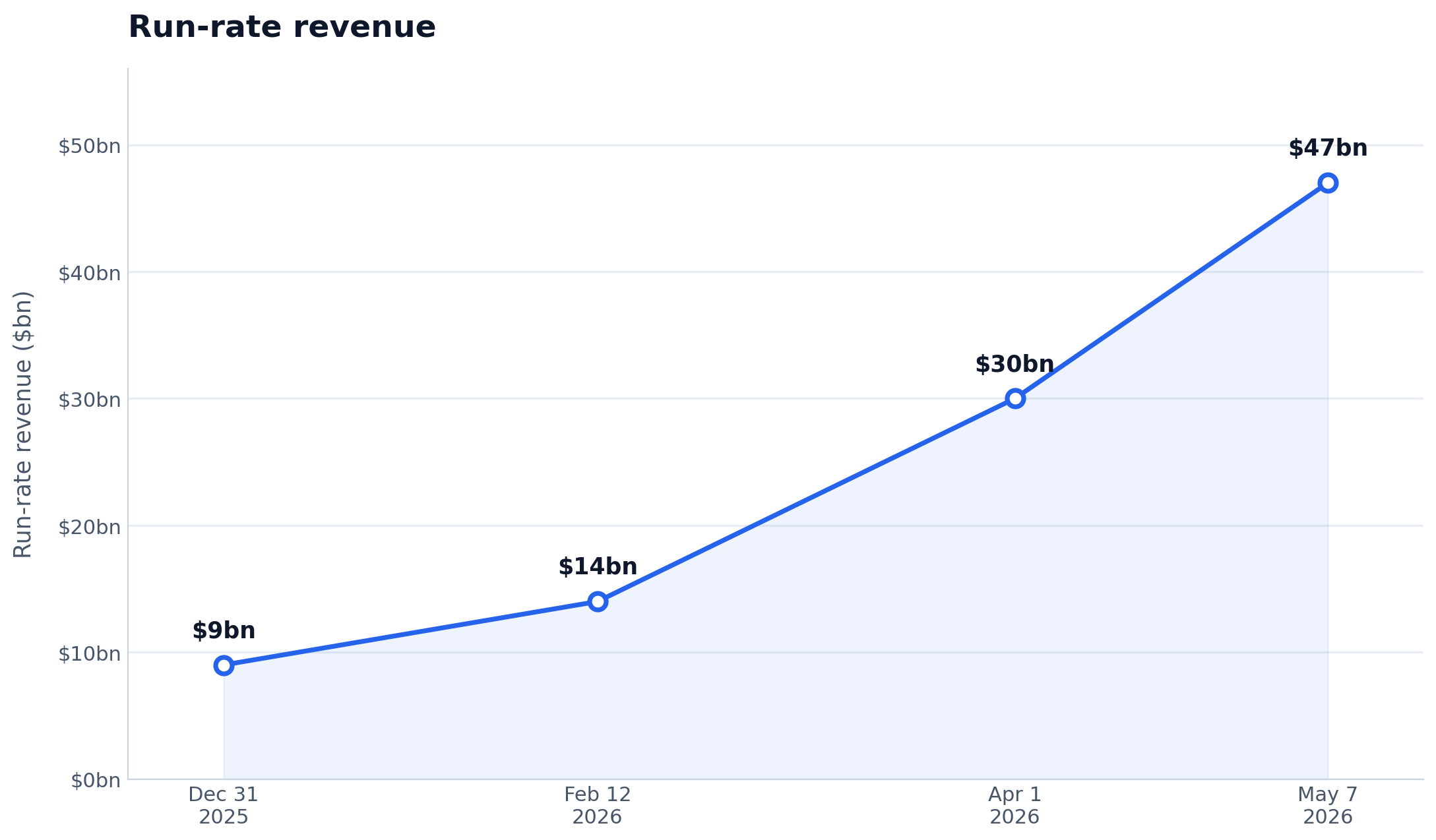
The most interesting thing about Anthropic's $65B Series H announcement is this line (emphasis mine): Since our Series G in February, adoption has continued to grow across global enterprise customers, and our run-rate revenue crossed $47 billion earlier this month. Anthropic have made a bit of a habit of sharing their "run-rate revenue" in this kind of announcement, which is an annualized projection of their current revenue - typically calculated by taking the most recent month and multiplying…

Anthropic shipped Claude Opus 4.8 today. My favourite thing about it is this note in the release announcement: Users will find Opus 4.8 to be a modest but tangible improvement on its predecessor. There’s still more to be done: we’re working on developing and releasing models that provide many of the same capabilities as Opus at a lower cost. It's so refreshing to see an AI lab honestly describe a release as a minor incremental improvement over the previous model! Honesty seems to be a theme.…
Release: llm-anthropic 0.25.1 New model: Claude Opus 4.8 (claude-opus-4.8). New -o fast 1 option for fast mode, for organizations with that feature enabled on their account. Default max_tokens for each model now defaults to that model's maximum output rather than 8,192. #72 See also my notes on Opus 4.8 - I used this new release of llm-anthropic to generate the pelicans.
Tool: markdown-svg-renderer A slightly customized Markdown rendering tool with special treatment for fenced code SVG blocks - it both renders the image and provides a tab for switching to the code view. You can paste in Markdown or give it a URL to a CORS-enabled Markdown file or Gist. Here's an example where it loads a Markdown file full of LLM pelican logs for Opus 4.8. Tags: svg, tools, markdown, cors